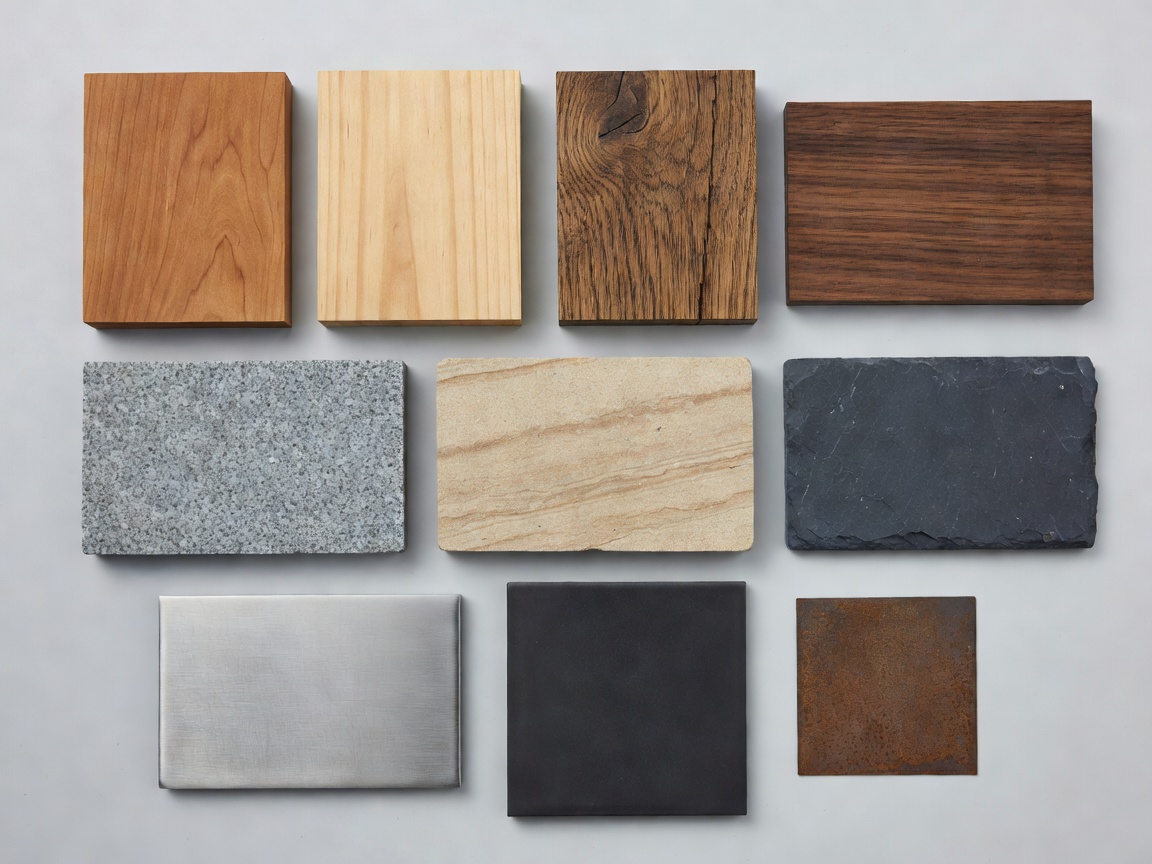
Timber
Timber adds warmth, texture and a direct connection to the structure. Species, grade, finish and exposure matter. Too many tones can make a compact interior visually busy; one primary timber and one controlled secondary tone usually reads more clearly. Confirm movement, moisture exposure and cleaning requirements.
Plywood and cabinetry
Plywood can create efficient, robust built-ins when edges, veneers and coatings are specified carefully. Cabinet depth should follow the object stored rather than a standard module. Use adjustable shelves where contents change, and fixed niches where a task is stable. Hardware needs to be replaceable and comfortable in daily use.
Stone and metal
Stone provides tactile mass and can work well at a splashback, threshold or worktop, but weight and fabrication affect the construction. Metal can protect high-contact edges and introduce contrast. Dark metal shows dust and fingerprints more readily; textured or satin finishes may be easier to live with than highly polished surfaces.
Glass and reflective surfaces
Glass can borrow light and extend sightlines, especially in doors or shower screens. It also introduces cleaning, privacy and impact considerations. Reflective surfaces should be placed deliberately. A small amount can widen a view; too much can amplify clutter and glare.
Flooring and walls
Flooring receives concentrated traffic and should tolerate grit, wet footwear and furniture movement. Wall finishes need to handle contact near entrances, kitchens and beds. Continuous finishes can simplify visual reading, but changes at wet zones, junctions and service access must be properly detailed.
Light and hardware
Layered lighting separates general illumination, task light and low-level evening light. Put controls where the activity occurs, not only beside the entrance. Hardware is a small but repeated touchpoint. Handles, hinges, taps and hooks should suit the hand, withstand use and remain serviceable.
Durability and maintenance
Ask how a surface ages, not only how it looks on completion. Consider staining, refinishing, replacement, water exposure, ventilation and cleaning access. A material with a modest initial appearance may perform better if it can be repaired locally and maintained without dismantling adjacent work.
Checklist
- Limit the number of dominant surface tones.
- Record weight and moisture implications.
- Specify repairable finishes and accessible hardware.
- Test samples under actual light.
- Coordinate lighting with storage and task zones.
Good for
Interior briefs, finish schedules, renovation decisions and compact-kitchen planning.
What to know
Material labels do not guarantee performance. Ask for the exact product specification, installation condition and maintenance requirement.